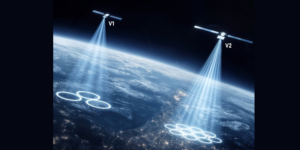
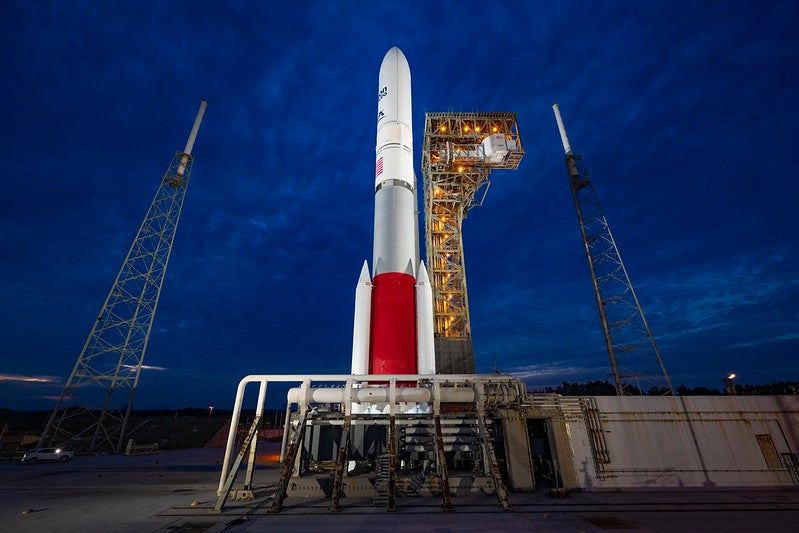
A United Launch Alliance Vulcan rocket suffered an anomaly during its first launch for the Amazon Leo constellation on Sunday, in a return to flight mission after months out of service. The Vulcan rocket was carrying 40 Amazon Leo satellites, the most in one single launch so far for the constellation.
The mission took off at 12:40 p.m. ET on Sunday from Cape Canaveral Space Force Station in Florida. The launch broadcast showed the vehicle cleaning the pad and all solid rocket boosters jettisoned about a minute and a half into the mission.
The booster engine successfully cut off, and the upper stage engine ignited successfully, about five minutes into the mission. The launch broadcast confirmed the payload fairing was jettisoned.
The mission seemed to be on track during the last update around 9 minutes and 30 seconds into the mission, but the launch broadcast ended before announcing the anomaly.
ULA said in a statement Sunday afternoon that the Vulcan vehicle “suffered an anomaly 10 minutes into the flight and failed to deliver the Amazon mission to orbit.” This is the first full launch failure for ULA.
ULA has not shared further details on the anomaly at this time. The next milestone was set to be Centaur first main engine cut off, at around 17 minutes into the mission.
“ULA exists to provide assured access to space for our nation and for the customers who depend on us. That purpose is why we take on some of the hardest missions in spaceflight, and why we hold ourselves to the standard of mission success. Today, we did not meet that standard,” the company said in a statement. “We will work closely with our customer and other appropriate organizations to find the cause, determine the appropriate corrective action, and return to flight as quickly as possible.”
Sunday’s launch was delayed twice — it was delayed from Friday due to a power interruption in the air liquide gaseous nitrogen (GN2) plant, then delayed from Saturday due to a network communication issue between the ground equipment and the launch vehicle.
The Vulcan rocket has been out of service since February, when it experienced an anomaly with the solid rocket motors built by Northrop Grumman. The February launch for the U.S. Space Force as a customer was successful, but the Space Force suspended Vulcan launches for the National Security Space Launch (NSSL) program to fix the anomaly.
ULA recently stated that after an investigation with its team, Northrop Grumman, the Space Force, and government agencies, changes to the nozzle were made and fully tested.
“The preliminary data shows the GEM 63XL boosters performed as expected and successfully separated from the Vulcan launch vehicle before today’s anomaly,” Northrop Grumman said in a statement.
This was the fifth launch for the rocket, which had its debut mission in early 2024.
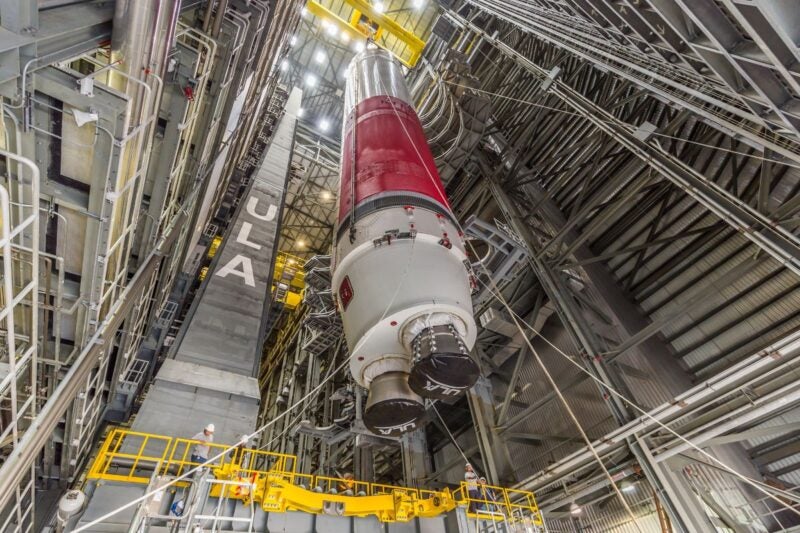
The mission was carrying 40 Amazon Leo satellites — the largest launch yet for Amazon Leo. The rocket was configured in the Vulcan VC6L variant with the Centaur V shorter, optimized version of the upper stage and six side-mounted solid rocket boosters.
It was the first of 38 planned Vulcan rocket launches for Amazon, following eight missions for Amazon Leo with the Atlas V rocket.
Amazon called ULA a “trusted partner” in a statement after the failure. “There is risk with any launch, and that’s especially true for inaugural missions like LV-01. ULA has been a trusted partner for Amazon, and we believe they’ll learn from this mission and deliver on their long-term plans for Vulcan,” Amazon said.
In a pre-taped interview during the launch broadcast, Amazon Leo Launch Systems Director Melissa Wuerl said Vulcan would be a “gamechanger” and a “workhorse” for the constellation.
“This is meant to fly routinely, it’s meant to fly at a very high cadence,” Wuerl said. “We’re launching close to 1,500 satellites on Vulcan, which is nearly half of our constellation. This is a vehicle that’s going to make a difference for us.”
Editor’s note: This story was fully updated on Nov. 15 after the launch