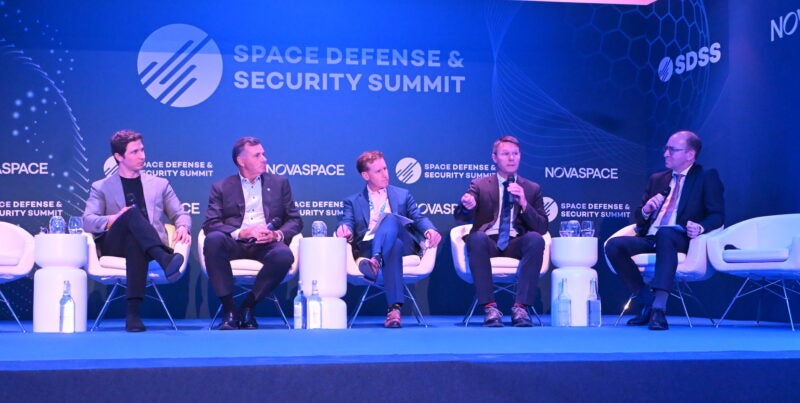
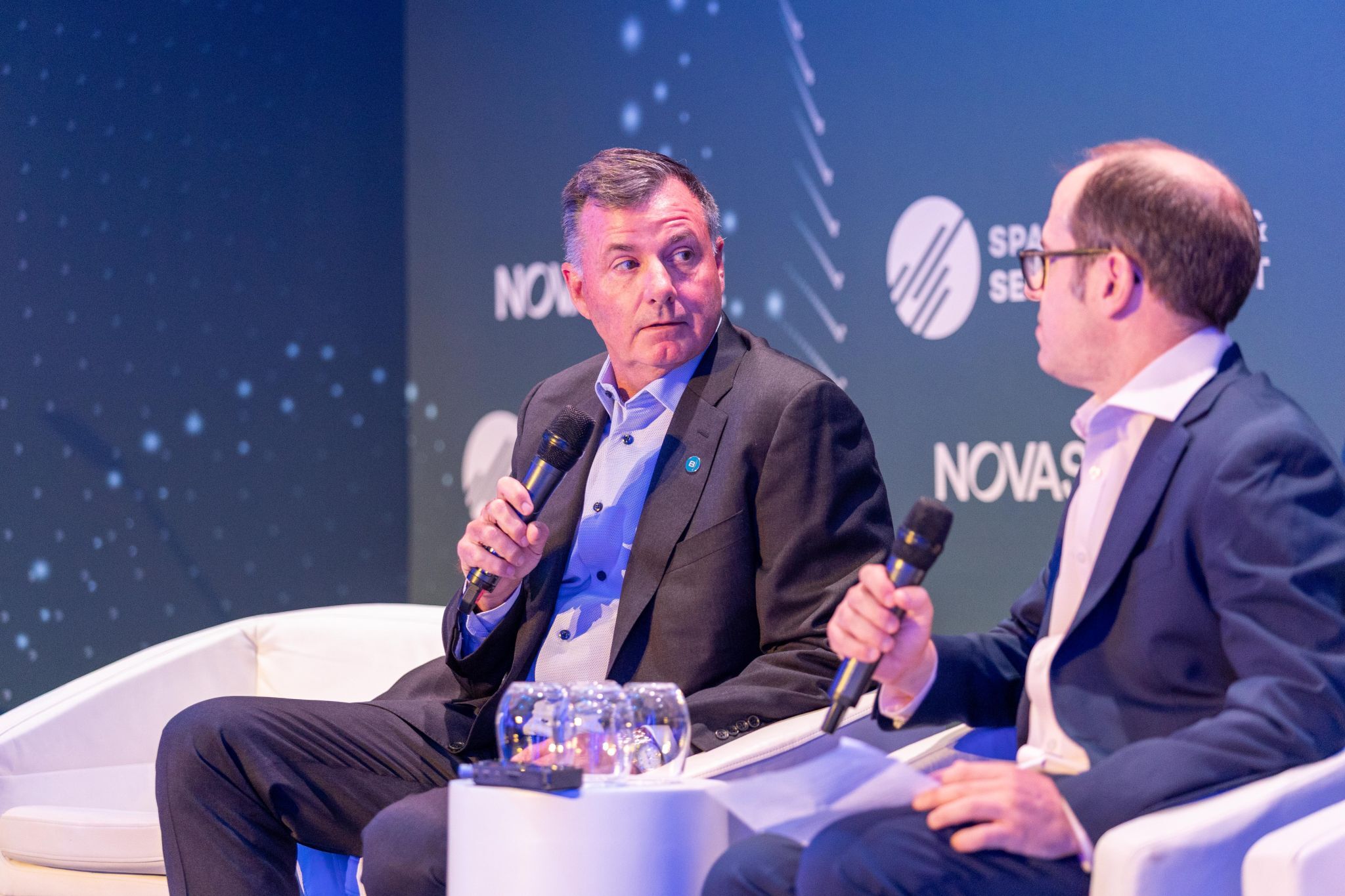
At the Space Defense and Security in Summit (SDSS) in Paris last week, Via Satellite Senior Editorial Director Mark Holmes sat down with BlackSky CEO Brian O’Toole to talk about the defense and sovereign market for a company like BlackSky. With so many commercial companies targeting these markets, how can companies stand out in an increasingly crowded market? During the fireside chat, O’Toole talked about the business models that are working in this market, the onset of AI, as well as highlights from BlackSky’s recent dealflow with defense customers.
VIA SATELLITE: Do you believe that sovereignty in space is the market, the opportunity right now for companies like BlackSky and others? Has this evolved quicker than you expected?
O’Toole: It certainly is an exciting time in the market. I do think sovereignty is probably the number one thing on everybody’s mind. Defining what sovereignty is a big question. It is everything from ownership to control, and then there are the localization aspects of all of this. It is a complex topic, but it is it is probably the largest market opportunity that we see, and it has moved very quickly.
I think if you even think back five to seven years, even in our case, we were primarily a services company, and now we have introduced mission solutions as part of our offerings, and have structured mission solutions in a way where we can meet customers where they are. All over the world, they are on a different part of this journey right now.
VIA SATELLITE: Sovereignty in space has traditionally referred to owning a constellation. In a market with rapidly expanding commercial options – especially for a software-first company like BlackSky — what does ‘sovereignty’ mean now? Has the definition evolved beyond owning satellites?
O’Toole: It is part of the equation. I think in our case, we have services that give customers the ability today to have access to very high resolution, high frequency monitoring from a proven commercial constellation, and that is an important aspect of supporting their national security needs today.
Sovereign solutions take years to develop, and whether that is owning a constellation or also exploring other business models where it could be Constellation-as-a-Service (CaaS), where there is assuredness and control as part of that offering. We do not really see the shift in the market that dramatically.
We have always been a national security first customer. We view the shift in the market as more, how do we align our capabilities to be where our customers would like us to be to help them on that on that journey?
VIA SATELLITE: What will commercial AI systems allow customers to do that they can’t do now?
O’Toole: Obviously, [this is] a big topic in the news. I think what is the most important is understand that AI is really good if you know what questions you are trying to answer, and there is a lot of things to bring to bear on that. I think that is where customers need to lead on the types of things they want to accomplish on their mission operations, and then understand where AI can be supportive of that.
We use AI in all kinds of all different aspects of our architecture, everything from autonomous tasking operations, that is intelligent understanding of where our customers are tasking and how we control the satellites to do that, to the AI processing on the imagery in the output of that and how to combine it with other data sources to deliver real time insights because AI can exist in so many different places in these architectures. I think the important things for customers is to understand where it can help their mission, but then also leverage the speed and the scale that commercial moving to help them get their fast.
VIA SATELLITE: Have AI-enabled systems influenced the balance between demand for sovereign hardware systems and commercial, software‑driven subscription services for space‑based intelligence?
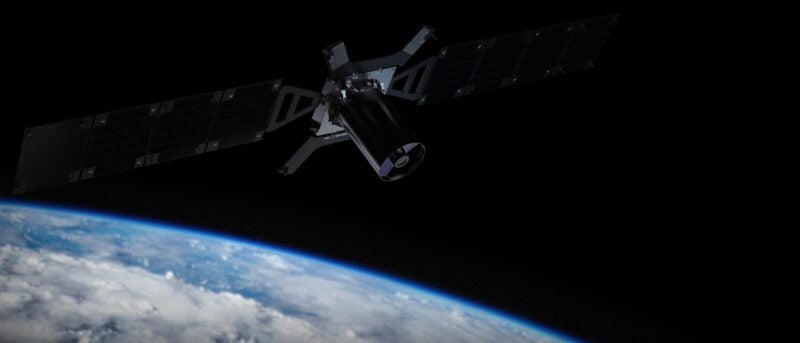
O’Toole: There is a very strong demand for services. We launched just in the past 12 months our Gen-3 capability. It is a very high-resolution Earth imaging satellite. If you think about it, there is probably less than 10 of those commercial assets in the world that have that type of 35-centimeter imaging capability, that is needed today.
We have customers around the world subscribing to that service in an offering that we call ‘Assured,’ which is giving them assured access to where and when they want to collect and how they collect with one of the most advanced constellations in the world.
The reason why that is important for the sovereign solutions is this is proven technology that is working on orbit. The Gen-3 satellite architecture worked beyond our expectations out of the box. It works really fast, and it is meeting expectations. An example is we just launched another satellite recently, and in less than 24 hours, we were imaging, and now we are delivering that capacity to customers.
And so, the speed with a proven architecture is essential. The service element provides that capability to customers immediately, but it is also a way to demonstrate that this technology can be integrated into their roadmaps for their sovereign solutions, knowing that it is proven and it works, and it is scaling, and we are evolving it. We see all these things going hand in hand, and we built a technology platform in space and on the ground to service both of those markets.
VIA SATELLITE: Real-time dynamic monitoring from space is a massively data-intensive activity, which means it’s a perfectly suited for AI. With nations looking to create sovereign architecture, what will be the long-term effects of commercially available technology on the intelligence landscape?
O’Toole: I think it is important to understand that when you think about Earth Observation (EO), there are multiple missions. There is the traditional mission of foundational mapping, and every intelligence agency, military operations use these very accurate base maps in which to have as a backdrop for their geospatial intelligence analysis and applications. That is one aspect of the of the of the opportunity.
The other side of this is where we have initially started focusing is in high frequency monitoring. Our constellation is a taskable think point and shoot cameras that are monitoring the most strategic locations at every hour at very high frequency and low latency. That lays on top of foundational capability, so I think when looking at your question on architectures, customers have to both look at the foundational aspects of geoint and where space plays into that.
But then now when you start thinking what is available today and what is going this is going to look like in three to five years, when you have high-frequency monitoring of signals intelligence, SAR capability, electro-optical, very high resolution, and then how that can be brought to bear against some of the modern threats under real-time, low-latency conditions, I think that is a massive opportunity.
AI has a significant role to play there because of the speed and volume at which the information will be coming in, and then you need to process it in a way that you are actually delivering actionable intelligence to decision makers. This is really the next step in the industry as all of this comes together, and I think AI will play a really important role.
VIA SATELLITE: Will commercial always be on the outside looking in?
O’Toole: I don’t think so. I think everybody feels this is a really important time in the market. When I say everybody, I say industry and the customer community. I think the partnership opportunity has never been greater. The market overall recognizes the speed at which commercial technologies are moving, but at the same time, the government customers are dealing with near-term threats and issues while trying to map out long-term roadmaps related to their technology, their sovereign capabilities, and their intelligence analysis capabilities. We have only experienced quite a collaborative integration with customers on how we work together to, to get them where they want to be.
VIA SATELLITE: You have announced seven- and eight-figure deals this year? Is this just the start of a new gold rush for EO companies as you look to combine software, hardware, AI/data services?
O’Toole:We have had a really exciting year. The way that we have structured our business is around the long term partnership with our customers, and so we have three elements of our business. We have our subscription business, which is selling assured tasking and imaging and analytic services a s a service or a subscription.
We have our mission solutions, which is how we work with customers that want to either own or have hybrid architectures around their sovereign objectives, and then we have advanced technology programs with our customers that are looking for how technology is going to evolve in the next three to five years.
We have been really on the back of Gen-3. We have seen a tremendous growth in the services related to our very high-resolution imaging capability. We have announced some very important long-term partnerships in the mission solution side. One was two weeks ago with the opportunity here in France and the UAE partners in that consortium as being the exclusive EO constellation provider for that, and then we also just recently announced a partnership with U.S. government to accelerate the development of the next generation high-performance digital mapping constellation.
This is really maturing as an industry around all of these elements coming together, and getting working with customers and working together on their journey. I am not sure would call it a ‘gold rush.’ We come at this as really first and foremost looking to be a very strong partner to our customers, and we have set up our business to do that.
VIA SATELLITE: If you could name one deal this year that was a game changer for BlackSky, which would you highlight and why?
O’Toole: It is hard to pick one. I think I just mentioned the three of them, but I think they are all interrelated in a way that we are seeing a very big step up by customers in accessing our constellation through services, leveraging the Gen-3 technology that is delivering superior, very high resolution imaging capability, but it is built on the same Gen3 technology on the sovereign capability, and so I think they are all significant. But I will say from the company’s perspective, we had purposely built a single platform that will enable all three of those businesses.
So, the opportunities that we have captured and the important customers that have trusted in us to go on this journey with them is a huge testament and validation to our strategy around this flywheel of proven technology with highly reliable assured services and the ability to deliver very high-performing sovereign capabilities with best-in-class technology. They are all related, but it has been a big validator for us this year. It has been pretty exciting.