IZMIR, Turkey — NATO is ready to invest billions new capabilities and this will have some key long-term ramifications for the space industry. Dylan Browne, general manager of NATO Communications and Information Agency (NCIA) said that the NCIA expects to push out procurements of 2.7 billion euros ($2.97 billion) over the next two years. These procurements will be areas such as space, cyber, AI, and cloud.
Browne described this version of NATO as “NATO 3.0,” which is all about moving faster. He added, “NATO must work with industry but earlier. This means sending stronger demand signals, and creating more opportunities to move rapidly. We are sending a clearer, demand signal to the industry.”
At NATO Edge in Izmire, Turkey, Browne admits there are a number of challenges ahead for NATO such as turning technical advantage into operational advantage. He spoke of how things like AI, cyber, space, cloud, and autonomous technologies are changing the ways in which militaries operate.
“NATO must strengthen its defense industrial base. It requires closer engagement with industry,” he said. “We have a significant capability ambition. Industry is an essential partner in meeting this challenge. NCIA has a central role to play, and we are tasked to deliver and sustain the infrastructure that will allow NATO to operate. We help connect capabilities across the domains.”
The key theme was that NATO is changing. It wants to become more flexible, agile and be easier to work with for industry. In cyber, NATO has changed how it buys capabilities here, with a cyber marketplace, with 22 nations behind it. “This is faster. It shows that change is already happening.”
With hybrid attacks on the increase, the onus will be on NATO to respond. Browne said he wants commercial companies to bring their best technology to accelerate decisions. “Performance, on-budget, secure-by-design, interoperable, we need that on day one. We will offer clarity, speed, and partnership. The edge is where the fight is. Our alliance is one picture, one fight. When a crisis comes, it is already too late to deliver. NATO has one simple test. Are we ready to fight tonight? Not next year. This is NATO 3.0,” he added.
The Russian Threat
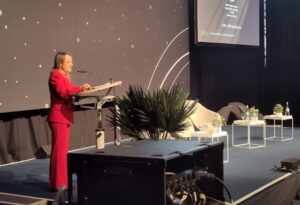
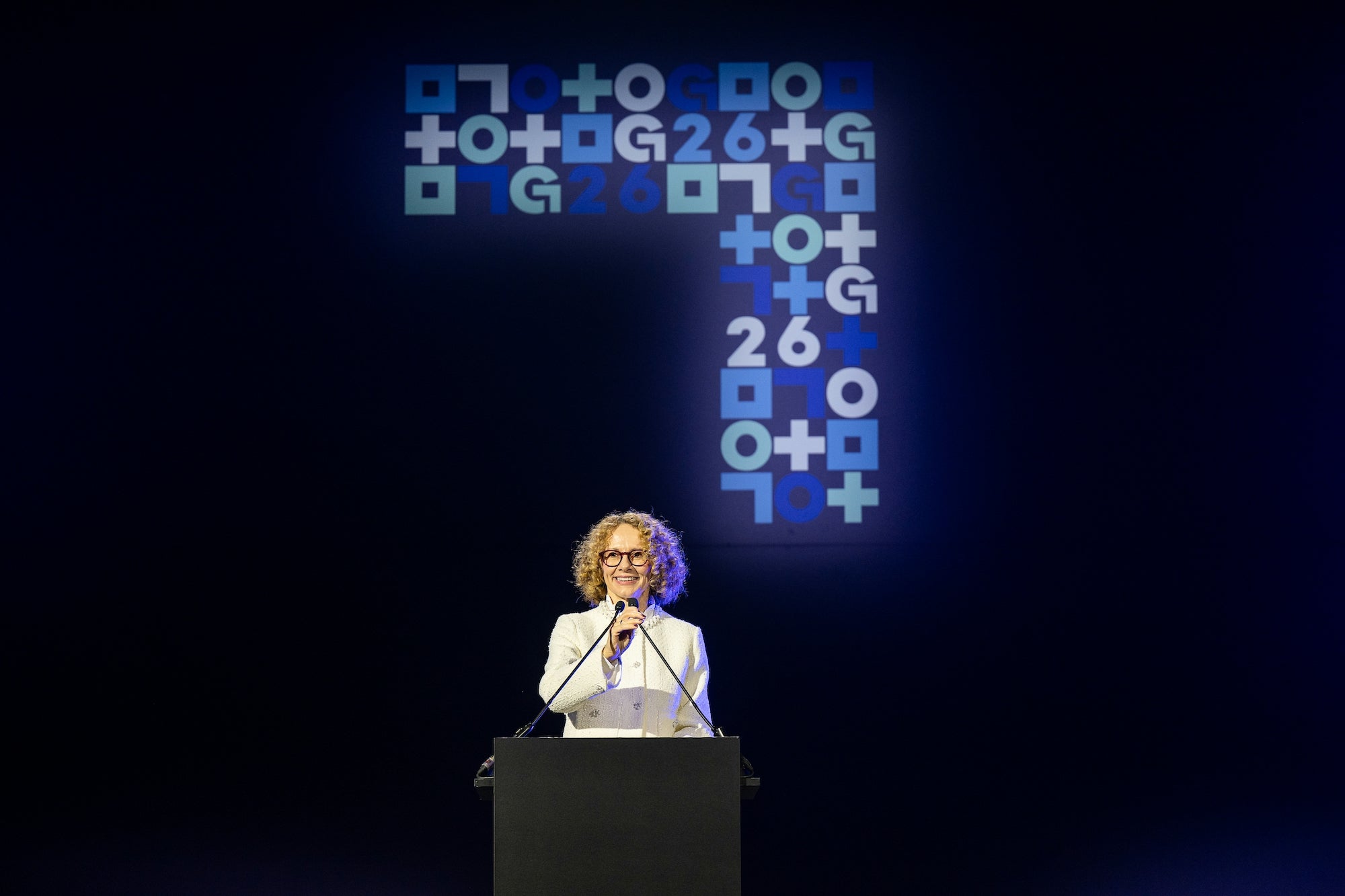
In another keynote on the first day of NATO Edge, NATO Deputy Secretary General Radmila Shekerinska, spoke of the threats, and that NATO needs to retain an “important momentum” as it looks to boost its capabilities to stare down these threats. There are no doubts where the threats are now coming from.
“The threats we face are more dangerous. Russia continues to be the biggest long-term threat to security. They are basically looking to break Ukraine’s will. It is ramping up its hybrid attacks against NATO nations with drone incursions, sabotage. Malicious cyber attackers continue to pose a threat. We need to ramp up our cyber defences. We are working with many other partners to understand the threats,” she said.
Shekerinska spoke of the importance of the cyber domain for NATO. “Our military capabilities are fully cyber enabled. Every fighter jet, every tank, every satellite has a computer built in. Connected digital systems fuse data across domains. They enable more precise targeting. They make it easier for allies to work together. They also create vulnerabilities. Cyber attacks disable key systems. Cyber resilience is making sure that nobody gets behind these walls that we are building. We need to secure every step in the defence supply chain,” she said.
Crucially, she touched upon the importance of critical infrastructure (CI) and how NATO needs to work hard to maintain things like food systems, energy systems, transportation systems etc, particularly in the era of AI.
“This is not a job we can do alone. We need governments and industry working together. At NATO we prepare to operate in crisis. We have made good progress while building long-term partnerships,” she said. “Frontier AI models are making progress each month. AI poses a challenge. It can be used to find and exploit vulnerabilities in our systems, but we can do this ourselves. It can help us tackle threats more quickly. While we embrace the opportunities AI presents, we are using it responsibly.”
NATO’s Digital Transformation
One of the more interesting perspectives on the first day of NATO Edge was given by Air Chief Marshal Johnny Stringer, deputy supreme allied commander of Europe Allied Command Operations, who made some important points related to NATO’s digital transformation. In terms of cyber, he said NATO has to win the battle in terms of access, protection, denial, and sustainment. “I don’t like soft word enabling. Digital capabilities are foundational. Particularly for a defensive alliance, it is essential. Industry in all of its forms underpins credible deterrents. It is the case in digital.”
Stringer gave an interesting analogy when he said in the first 80 to 90 years of military airpower, the story was that imagination was ahead of technology. But after this, people had “lost their way.” In this era, he said it was vital that the likes of NATO ensure the ambition and imagination stays ahead of technology rather than the other way around.
“We have had the luxury of Europe and North America of years of relative peace of Europe. It drove a ‘just enough’ mentality. You saw business language seeping into the military lexicon. We need to come back the hard-nosed, gritty realities of warfighting. We need companies to challenge us. Don’t just follow what we say,” he argued.
Stringer also had some pointed message for big industry, particularly if they buy smaller companies but don’t realize the benefits of their technologies. “I really worry we could make some poor choices. We need big industry to provide the oxygen to small industry not suffocate it. I want to make sure the things I need tomorrow are actually going to be there.”
On the subject of data sharing, Stringer added, “We need to improve data sharing across the alliance. I think we need to knock down the blocks on things like accreditation. If we don’t do this, we run the risk of talking past each other for the last three years.”